

Your first paid ad campaign will teach you something valuable or cost you money for nothing, and the difference is almost entirely decided before you launch. Most beginner budgets are lost to setup mistakes, not to bad creative.
Paid advertising is simply buying attention you have not earned yet. That is a legitimate and useful thing to do, provided you know what the attention is worth to you and can tell whether you got any value from it.
This guide walks through the full sequence: the maths to do first, how to choose a platform, how to structure the campaign, and how to read the results honestly.
Do the maths before you open an ad account
The single most common reason a campaign fails is that it was never viable. Work out these three numbers first.
- What a customer is worth. The profit from an average sale, plus the profit from repeat purchases you can reasonably expect. Profit, not revenue.
- What you can afford to pay to get one. Some fraction of that profit, leaving enough to run the business. Decide this before the platform tempts you.
- How many enquiries it takes to make a sale. From your own records. If you have never counted, count for a month before advertising.
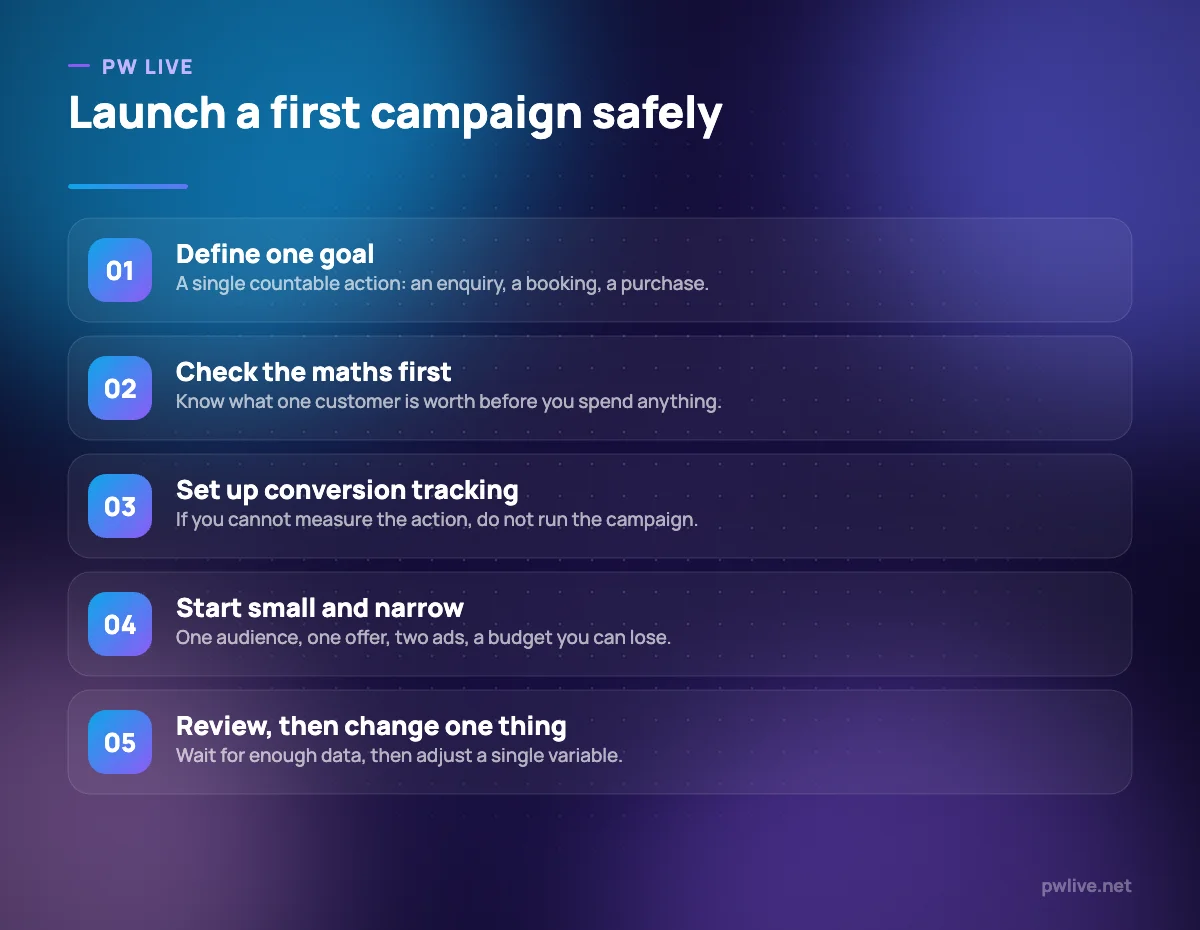
Multiply the last two backwards and you get your maximum cost per enquiry. That is your line in the sand. If the platform cannot deliver enquiries below it, the campaign does not work, however good the creative is.
If those numbers are unclear, sort the pricing side first. Our guide to pricing your product or service without guessing covers how to establish the margin you are working with.
Pick one goal and one platform
A campaign optimising for “awareness” while you actually need enquiries will spend your entire budget successfully doing the wrong thing.
Choose one countable action: a form submitted, a call placed, a booking made, a purchase completed. Everything else is secondary.
Then choose the platform by where the intent lives.
- Search advertising reaches people actively looking for a solution right now. Intent is high, competition and cost per click are usually higher, and it suits urgent or well-understood needs.
- Social and feed advertising reaches people by interest and behaviour rather than by an active search. It suits visual products, new categories and offers people did not know to look for.
- Marketplace advertising reaches buyers already in a purchasing mindset, if you sell where they shop.
Start with one. Running two platforms at once with a small budget means neither gets enough data to be readable.
Get the tracking right before you launch
If you cannot see which clicks produced enquiries, you are not advertising, you are donating.
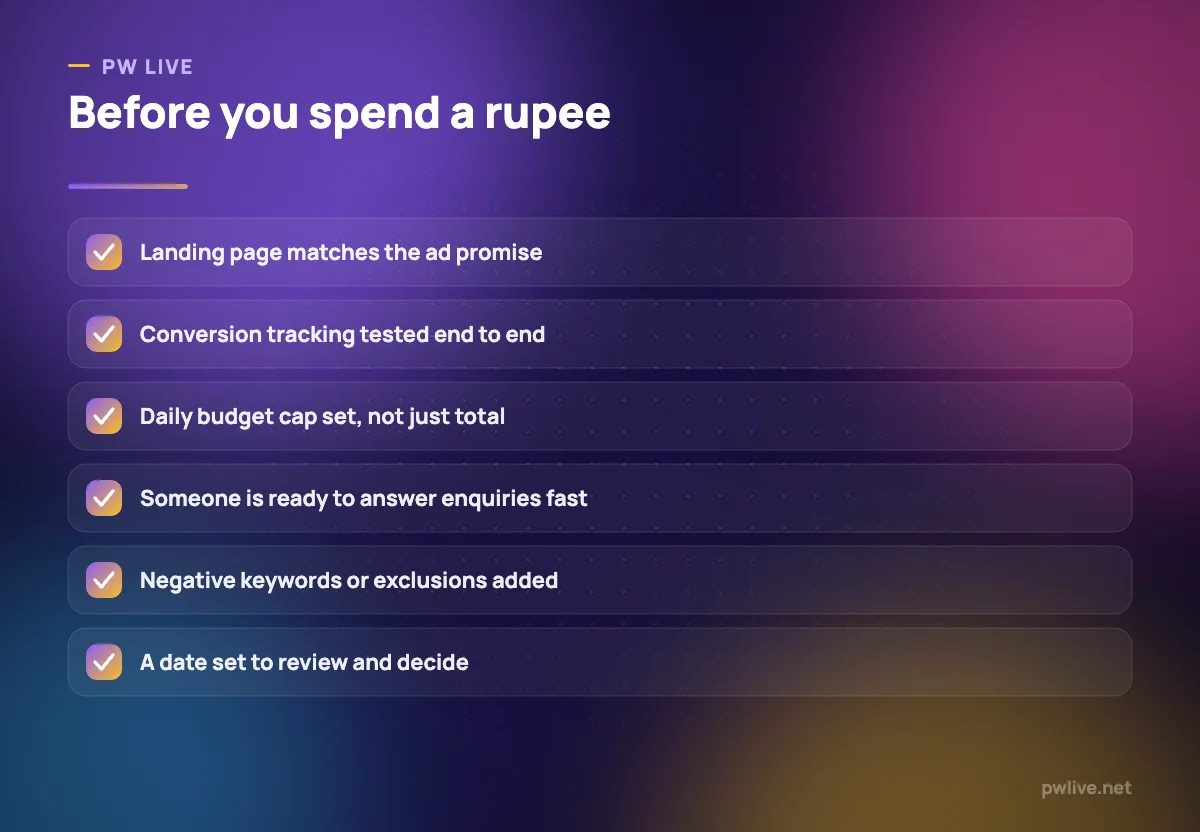
- Set up conversion tracking for your one chosen action and test it end to end by completing the action yourself.
- Tag your ad links so the traffic is identifiable in your own analytics.
- Send traffic to a dedicated landing page, not your home page, so you can see exactly what that campaign produced.
- Ask new enquiries how they found you as a backup. Tracking always misses some.
Be straightforward about data collection: use a clear cookie or consent notice where required, collect only what you need, and do not build profiles from information people did not knowingly provide.
Set a daily budget cap, not just a total. Platforms will happily spend a monthly budget in two days if you let them.
Write ads that match what the reader will find
An ad has one job: to bring the right person to a page that delivers what the ad promised. Clicks from the wrong people cost exactly as much as clicks from the right ones.
Practical rules:
- Say what the offer is, plainly, in the headline. Vague intrigue attracts curiosity, not customers.
- Qualify in the copy. Naming your price range, your city or your customer type reduces wasted clicks.
- Match the landing page to the ad word for word on the main promise. A mismatch is the most common reason a campaign with good click rates produces nothing.
- Make the next step obvious and small.
- Never promise something you cannot deliver, and never fake urgency, scarcity or discounts. Platforms enforce this, and customers remember it.
Write two versions with a genuinely different angle rather than two versions with a different comma. The persuasion mechanics are covered in copywriting fundamentals.
Structure and target the campaign narrowly
Start narrower than feels comfortable. A small budget spread across a broad audience produces data you cannot read.
For search campaigns:
- Group a handful of closely related search phrases per ad group, so the ad can speak directly to them.
- Use phrase and exact match rather than the broadest setting while you are learning.
- Add negative keywords aggressively: “free”, “jobs”, “salary”, “course” and any term that signals someone who will never buy.
- Check the search terms report weekly and keep adding negatives. This one habit saves more money than anything else.
The phrase-selection method in keyword research without expensive tools applies here, with one change: for ads you want commercial intent, not informational.
For social campaigns, start with one clearly defined audience and one offer. Broad interest targeting can work, but only once you have enough conversions for the platform to have something to learn from.
Read the results without fooling yourself
Give the campaign enough time and enough volume before judging it. Changing things daily guarantees you learn nothing.
Look at the chain in order, because each stage points at a different problem:
- Impressions but few clicks: the ad or the targeting is off.
- Clicks but no enquiries: the landing page or the offer is off, or the traffic is the wrong people.
- Enquiries but no sales: the follow-up process, the price or the qualification is off.
- Sales above your cost line: the maths does not work at this price. Improve conversion or stop.
Then change one thing at a time. Two simultaneous changes tell you nothing about which one worked.
Be honest about small numbers. A handful of conversions cannot prove one ad beats another, so treat early results as direction, not proof. Our guide to the marketing metrics that matter covers how to build a review habit around this.
Know when to stop
Set the stopping rule before you launch, while you are still thinking clearly. Write down the budget you are willing to lose and the date you will decide.
Three honest outcomes are possible. It works, and you scale slowly by raising the budget in small steps rather than doubling it. It nearly works, and you fix the weakest stage in the chain before spending more. It does not work, and you stop, keeping what you learned about the offer and the message.
Stopping is not failure. A small budget that bought you a clear answer about your offer is money well spent, particularly if it sends you back to earning attention rather than buying it. The marketing and sales archive covers those channels, and the digital marketing skill track puts paid advertising in sequence with the rest.
Key takeaways
- Work out what a customer is worth and your maximum cost per enquiry before opening an ad account.
- Pick one countable goal and one platform. Running several at once with a small budget teaches you nothing.
- Test conversion tracking end to end, and set a daily budget cap.
- Match the landing page to the ad promise exactly, and add negative keywords every week.
- Decide your stopping rule and review date in advance, then change one variable at a time.
Frequently asked questions
How much should I budget for a first campaign?
Enough to gather readable data on your one goal, and no more than you can lose without hurting the business. Decide the figure in advance and set a daily cap so the platform cannot outspend it.
Should I start with search ads or social ads?
Search if people are already looking for what you sell, social if they are not and your offer shows well visually. Pick one and give it a fair run before adding the other.
Why am I getting clicks but no enquiries?
Usually a mismatch between the ad and the landing page, an unclear next step, or targeting that attracts people who were never going to buy. Check those three in that order.
Do I need an agency to run ads?
Not for a first small campaign. Learning the mechanics yourself makes you a far better client later, and it is hard to judge an agency’s work if you have never seen the inside of an ad account.
Keep learning with PW Live
Browse every guide in Marketing & Sales, or pick a skill track and follow the roadmap step by step.





Leave a Reply