

GST basics for online sellers matter from your very first order, because selling through a marketplace usually pulls you into the tax system faster than an offline shop would. Understanding the structure early prevents penalties, blocked payouts and a scramble at filing time.
This article explains how the pieces fit together in plain language: what GST is, where registration comes into it, what an invoice must carry, and which records you should keep from day one.
This is general information, not tax or legal advice. Rules, rates and thresholds change, and your situation may differ. Confirm anything that applies to you on the official GST portal at gst.gov.in or with a qualified chartered accountant before acting.
What GST is, in one section
GST is a destination-based indirect tax on the supply of goods and services. The buyer bears it, the seller collects it and passes it to the government.
Two ideas explain most of how it behaves.
The chain of credit. A registered business pays GST on what it buys and charges GST on what it sells. It can generally offset the tax paid on business purchases, known as input tax credit, against the tax it collects, and pays the difference. This is why registered suppliers prefer dealing with registered buyers.
Where the supply happens. A sale within your own state is treated differently from a sale to another state. Intra-state supplies attract central and state components, while inter-state supplies attract an integrated component. For online sellers shipping across India, this matters constantly, because the buyer’s delivery address determines which applies.
Rates differ by product category and are revised from time to time, so look up the current rate for your specific goods on the official portal rather than relying on a figure from any article, including this one.
Registration: check your own position
Whether you must register depends on factors such as your turnover, the states you operate in, the type of goods or services you supply and whether you sell through an e-commerce operator. Turnover thresholds exist and differ for goods and services and for certain states, and they have changed over time.
The reliable approach is to check the current position on the GST portal or with an accountant. What is useful to know is the shape of the question:
- Most marketplaces require a GSTIN before you can list taxable goods, so in practice many online sellers register regardless of turnover.
- Selling through an e-commerce operator can change your obligations compared with selling only from your own website.
- Certain categories and certain interstate situations carry their own rules.
- Voluntary registration is possible, and can be worth it if you buy a lot from registered suppliers and want to claim input tax credit.
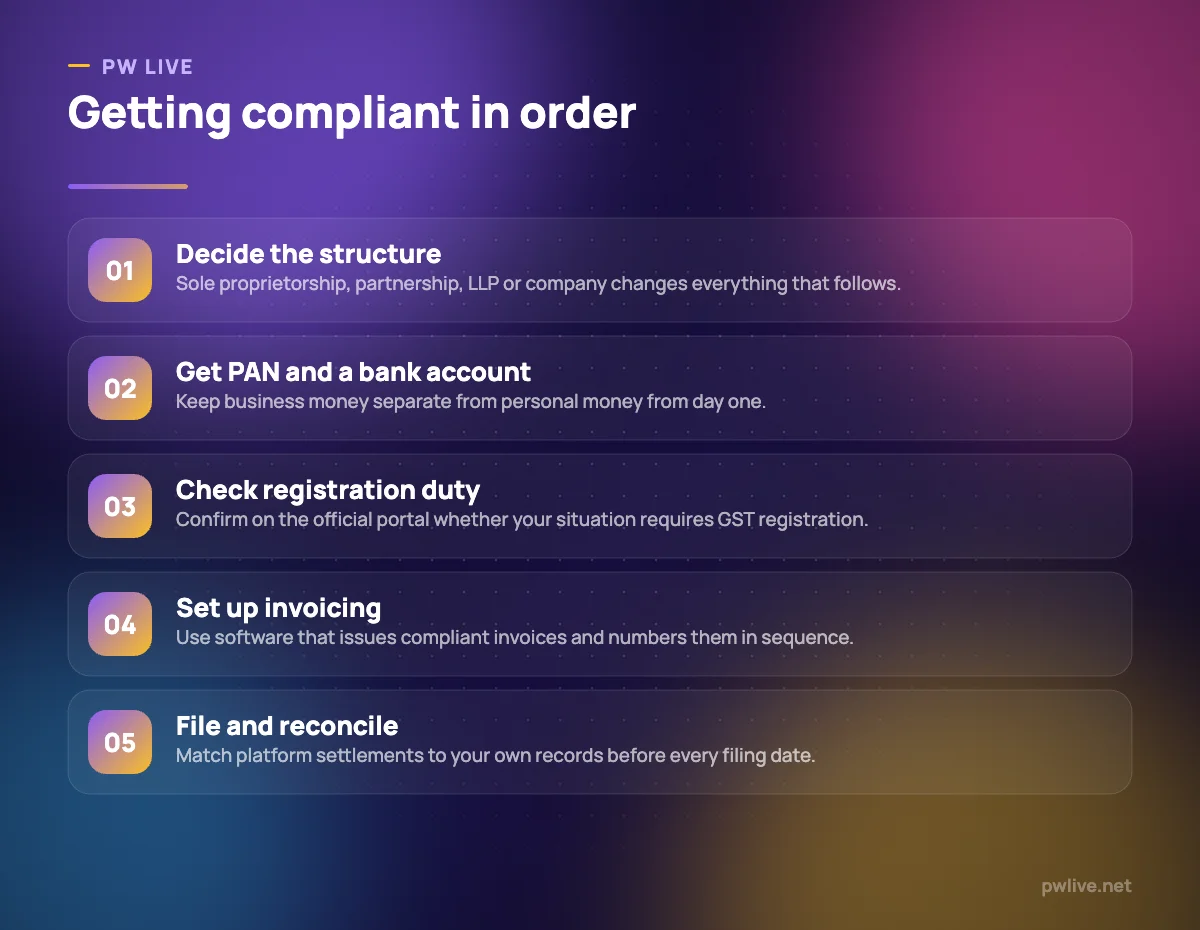
Registration itself is done online on the GST portal. You will typically need PAN, proof of business address, bank account details and identity documents for the proprietor or partners. If you are still setting up the business itself, our guide to registering a small business in India covers the step before this one.
What your invoices must do
Once registered, every taxable sale needs a proper tax invoice. Marketplaces usually generate these for you, but you remain responsible for their accuracy, and on your own website the responsibility is entirely yours.
A compliant tax invoice generally carries:
- Your business name, address and GSTIN.
- A unique invoice number from an unbroken sequential series, and the date.
- The buyer’s name and address, plus their GSTIN if they are registered.
- A description of the goods, quantity and the HSN code for the item.
- Taxable value, the tax components applied, and the total.
- Place of supply, which drives whether the intra-state or inter-state treatment applies.
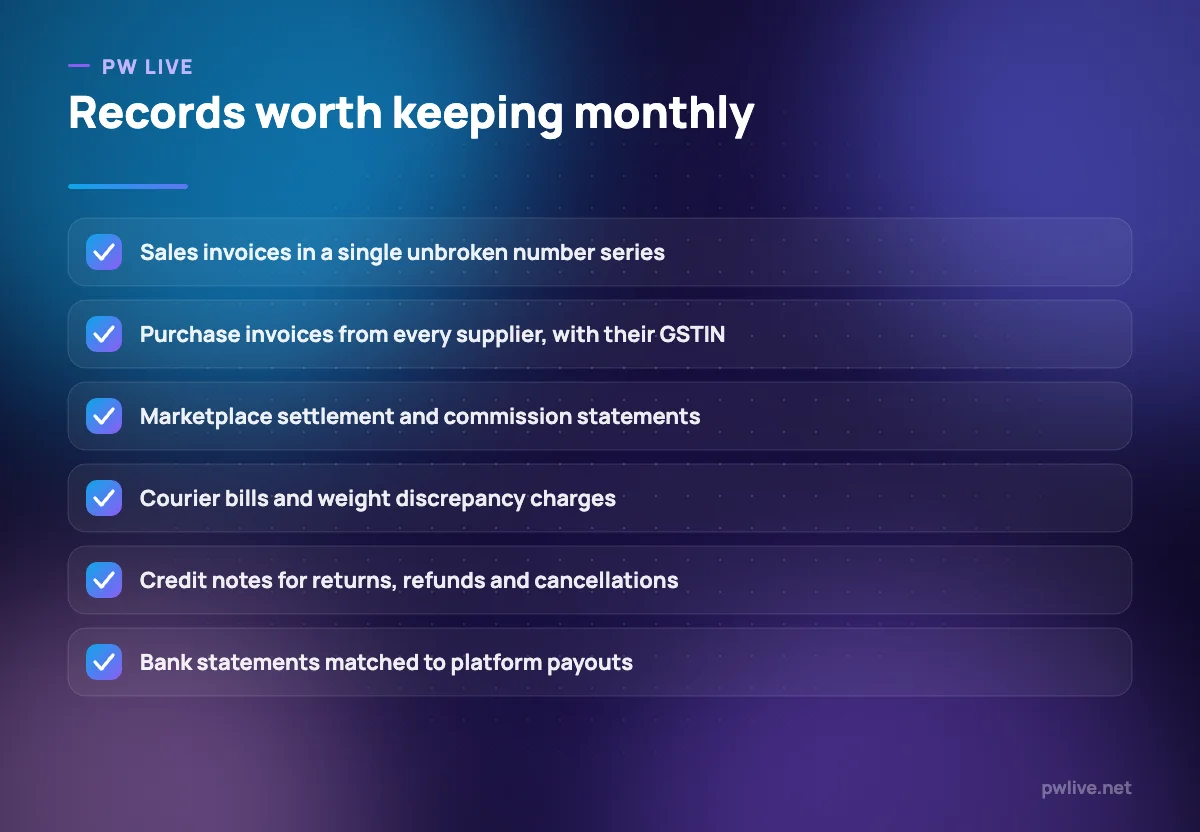
Two practical habits save trouble later. Keep one continuous invoice series rather than restarting numbers per channel or per month unless your accountant advises a specific scheme. And issue credit notes for returns, cancellations and refunds rather than deleting or editing the original invoice.
Use invoicing or accounting software rather than a spreadsheet once you are past a handful of orders a day. It handles number series, tax splits and export formats automatically. Our guide to invoices, quotes and contracts covers the wider documentation side.
Tax collected and deducted by marketplaces
E-commerce operators have their own obligations, and these show up in your settlement statements as deductions.
Marketplaces are generally required to collect a portion of tax at source on the sales they facilitate and deposit it against your GSTIN. That amount then appears in your electronic cash ledger on the portal and can be adjusted against your liability.
Three things follow from this:
- The money credited to your bank is not your revenue. It is revenue minus commission, fulfilment charges, tax collected at source and any other deductions.
- You must reconcile the platform’s statement against your own sales records, because mismatches do occur.
- Your reported turnover should reflect gross sales, not the net amount received.
Sellers who skip reconciliation usually discover the gap months later, when it is much harder to trace. Build it into a monthly routine.
Returns and filing rhythm
Registered businesses file periodic GST returns covering outward supplies and a summary of tax liability and credit claimed. The specific forms, frequencies and due dates depend on your registration type and turnover, and schemes exist that allow smaller businesses to file at longer intervals.
Rather than memorising form names that may change, set up a routine:
- Close your books for the period by a fixed date each month.
- Reconcile every marketplace settlement and payment gateway payout against your sales records.
- Check that purchase invoices from suppliers appear correctly, since your input tax credit generally depends on your supplier having reported the transaction.
- Hand a clean file to your accountant, or prepare the return yourself, well before the deadline.
- Keep an eye on the cash you will need to pay, because tax liability arrives on a schedule that does not care about your stock purchases.
Late filing typically attracts interest and late fees, and continued non-filing can affect your registration and your ability to sell. Confirm current due dates and penalties on the official portal.
Beyond GST: the other compliance you will meet
GST is the most visible obligation but not the only one.
- Income tax. Business profits are taxable, with advance tax due in instalments through the year for many taxpayers. See income tax basics for first-time earners in India for the personal side.
- Product regulations. Packaged goods, food, cosmetics, electronics and toys carry labelling, licensing or standards requirements specific to the category.
- Legal metrology declarations on pre-packaged goods, covering things like quantity, manufacturer details and country of origin.
- Platform policies, which sit on top of the law and can be stricter than it.
- Consumer protection rules for online sales, including how you present pricing, refunds and grievance contacts.
Check what applies to your specific category before you order stock, as covered in how to choose products to sell online.
Build habits that make compliance boring
The sellers who find compliance painless are not the ones who know the most law. They are the ones with tidy records.
Open a separate business bank account and never mix personal spending through it. Save every purchase invoice, including packaging and courier bills, because those carry input tax credit you are otherwise throwing away. Keep documents in dated folders with consistent names and back them up.
Once your order volume is steady, an accountant costs less than the mistakes they prevent. Give them clean data and their fee stays modest. Our guides on cash flow basics and the e-commerce and retail archive cover the financial habits alongside this, and the personal finance skill track helps with the money discipline underneath it all.
Key takeaways
- This article is general information; verify anything specific on gst.gov.in or with a chartered accountant.
- GST works through a credit chain, and the buyer’s delivery address determines whether intra-state or inter-state treatment applies.
- Registration duty depends on turnover, states, category and whether you sell through an e-commerce operator, so check your own position on the official portal.
- Issue proper tax invoices in one unbroken series, and use credit notes for returns rather than editing originals.
- Reconcile marketplace settlements monthly, since your bank credit is net of commission and tax collected at source.
- Keep a separate business bank account and save every purchase invoice, because unclaimed input tax credit is money lost.
Frequently asked questions
Do I need GST registration to sell on a marketplace?
Most marketplaces require a GSTIN before you can list taxable goods, and selling through an e-commerce operator can change your obligations. Check the current requirement on the GST portal and with the platform’s own seller documentation.
What is input tax credit in simple terms?
It is the tax you paid on business purchases, which a registered business can generally set off against the tax it collects on sales. Claiming it usually depends on holding a valid invoice and on your supplier reporting the transaction.
Do I charge tax based on my state or the buyer’s?
The place of supply, which for goods normally follows the delivery address, determines whether the sale is intra-state or inter-state and which tax components apply. Your invoicing software should handle this if the addresses are entered correctly.
Can I handle GST filing myself?
Many small sellers do, especially at low volumes with a simple product range. Once you are dealing with multiple channels, returns and credit notes, an accountant usually pays for themselves in avoided errors and penalties.
Keep learning with PW Live
Browse every guide in E-commerce & Retail, or pick a skill track and follow the roadmap step by step.





Leave a Reply