
Starting an online business in India has never required less capital: a phone, a product and an afternoon are enough to put a first listing in front of shoppers. The harder decision is where to sell: on a marketplace where customers already browse, or on your own store where you control the brand, the data and the margins.
This guide compares both routes honestly: how each works, what it costs in money and effort, the legal basics to sort out first, and how most sellers end up combining them.
The core trade-off in one sentence
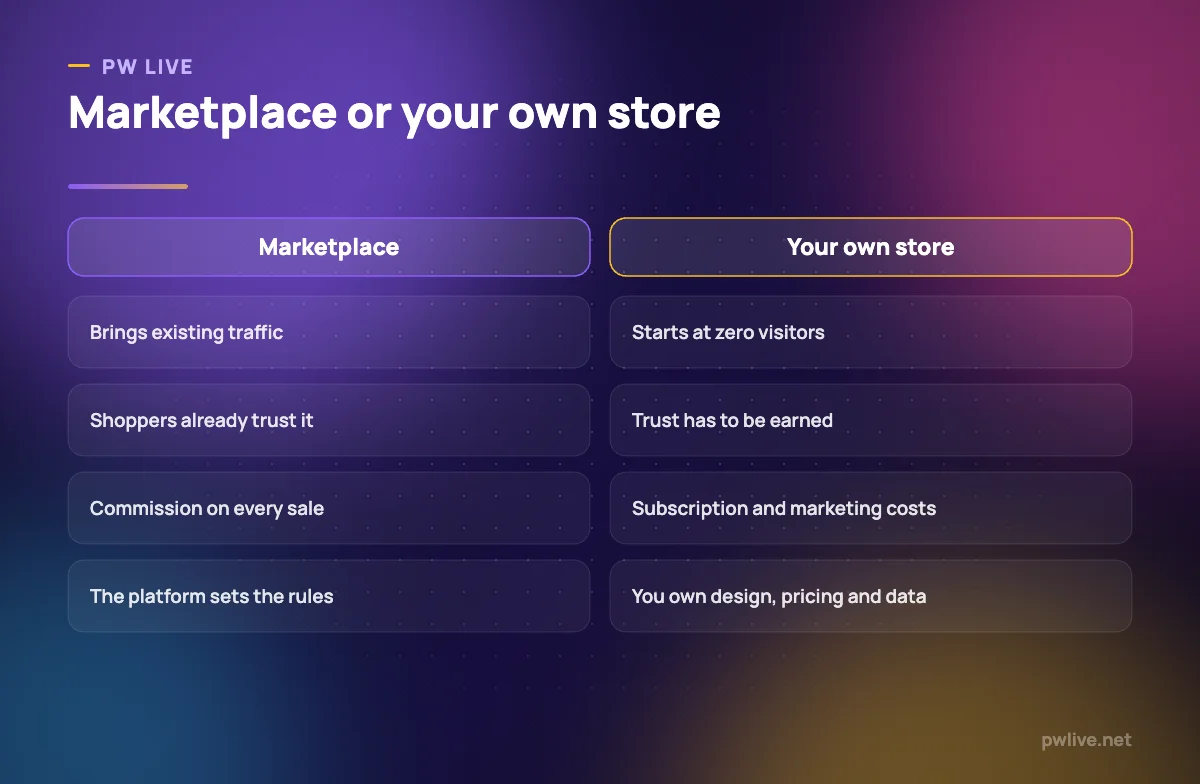
Marketplaces give you customers and take control; your own store gives you control and makes you find the customers.
- Reach: marketplaces bring existing traffic; your store starts at zero visitors.
- Trust: shoppers already trust the marketplace; a new store must earn it.
- Costs: marketplaces charge per sale; a store shifts costs toward subscriptions, payment processing and marketing.
- Control: your store sets its own rules on design, pricing and data; a marketplace sets them for you.
Selling on marketplaces
Large horizontal marketplaces, plus niche ones for fashion, crafts or groceries, let independent sellers list alongside established brands. The typical path:
- Register as a seller with identity, business and tax details.
- Create listings with titles, images, descriptions and prices.
- Choose fulfilment: ship orders yourself or use the marketplace’s logistics.
- Receive payments on the marketplace’s settlement cycle, after fees.
Advantages
- Immediate access to a large, ready-to-buy audience.
- Built-in payments, returns and support frameworks.
- Fast validation: within weeks you know whether your product sells.
Disadvantages
- Fees stack up. Commissions, shipping and closing charges vary by category and change, so read the current rate card before pricing.
- Intense price competition on near-identical products.
- Limited customer relationship; you usually cannot market to buyers afterwards.
- Policy risk: suspensions and rule changes are outside your control.
Building your own online store
Your store can be as simple as a catalogue shared over messaging apps, or as complete as a hosted storefront with a custom domain, payment gateway and shipping integration. The typical path:
- Choose a hosted store builder or a social-commerce setup, depending on budget and technical comfort.
- Register a domain and create the basic pages: products, about, contact, shipping and returns.
- Connect a payment gateway that supports UPI, cards and net banking.
- Arrange shipping through courier aggregators, decide on cash on delivery, and set up analytics from day one.
Advantages
- Full control over branding, pricing, bundles and promotions.
- Ownership of customer data, enabling repeat sales and direct campaigns.
- Better margins per order once traffic exists, with no per-sale commission.
Disadvantages
- No traffic by default; every visitor comes from your content, social media, ads or word of mouth.
- Trust must be earned with reviews, clear policies and professional presentation.
- More moving parts: hosting, payments, shipping, support.
Legal and financial basics to sort out first
Rules change, so treat this as a checklist to verify rather than legal advice.
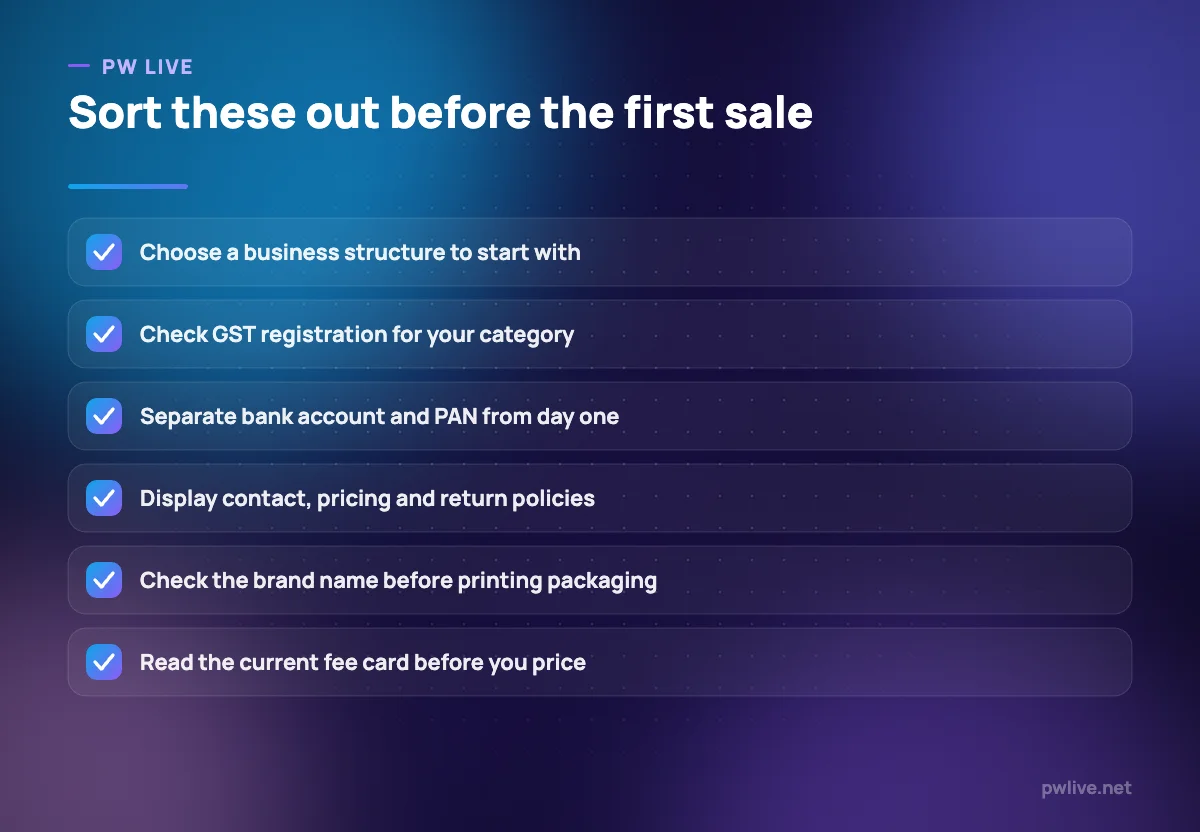
- Business structure: many first-time sellers start as sole proprietors and incorporate later.
- Tax registration: most large marketplaces ask for GST registration during onboarding, and your own store may need it depending on turnover and category; confirm current thresholds with a professional.
- Bank account and PAN: keep business and personal money separate from day one.
- Consumer rules: Indian e-commerce rules require sellers to display clear contact details, pricing and return policies.
- Trademark: if you are building a brand, check the name is available before printing packaging.
Choosing a first product, and the hybrid route most sellers take
A good first product is usually light and unbreakable, sits in a niche where you can be the obvious choice rather than the cheapest, keeps a healthy margin after fees, and is something you understand well enough to write honest listings. Start with a small range and expand what sells; the startups category has more on validating ideas before you invest.
Few successful sellers pick only one route. A common sequence:
- Validate on a marketplace. Use existing traffic to learn which products, prices and images convert.
- Build your own store once you know what sells, and send repeat customers there via packaging inserts and social channels.
- Keep the marketplace as a discovery channel while the store becomes the home of your brand.
Marketing your listings and your store
- On marketplaces, invest in listing quality: keyword-rich titles, clear photos, honest descriptions and quick replies to questions and reviews.
- On your own store, treat content and search as long-term traffic sources, and social and messaging as relationship channels.
- Learn the fundamentals before spending on ads, starting with the digital marketing skill page.
For more on listings, logistics and growth, follow the ecommerce category.
Key takeaways
- Marketplaces bring customers and take control; they are the fastest way to validate a product.
- Your own store gives control, brand and margins, but you must bring every customer.
- Sort out registration, tax details, banking and policy pages before the first sale.
- Choose a light, niche, high-margin first product you genuinely understand.
- Most sellers run a hybrid: validate on marketplaces, then move loyal buyers to a store they own.
Frequently asked questions
Can I start selling online with very little money?
Yes. Listing on a marketplace or selling through social and messaging apps needs almost no upfront investment beyond stock and packaging.
Do I need a GST number to sell online in India?
Most large marketplaces require one during onboarding, and your own store may need it depending on turnover and category. Verify the current rules with a tax professional.
Which route suits a handmade or niche product?
Usually a hybrid: use a marketplace for discovery and your own store or social channels to build a loyal, repeat audience.
Keep learning with PW Live
Browse every guide in E-commerce & Retail, or pick a skill track and follow the roadmap step by step.





Leave a Reply