

Some pressure before an exam is normal, even useful: it sharpens attention and gets you to the desk. The trouble starts when it never switches off: sleep shrinks, the syllabus feels endless, and each extra hour of study produces less than the one before.
This guide explains the difference between stress and burnout, offers routines you can begin this week, and is clear about when self-help is not enough. It is general wellbeing information, not medical advice.
Stress and burnout are not the same thing
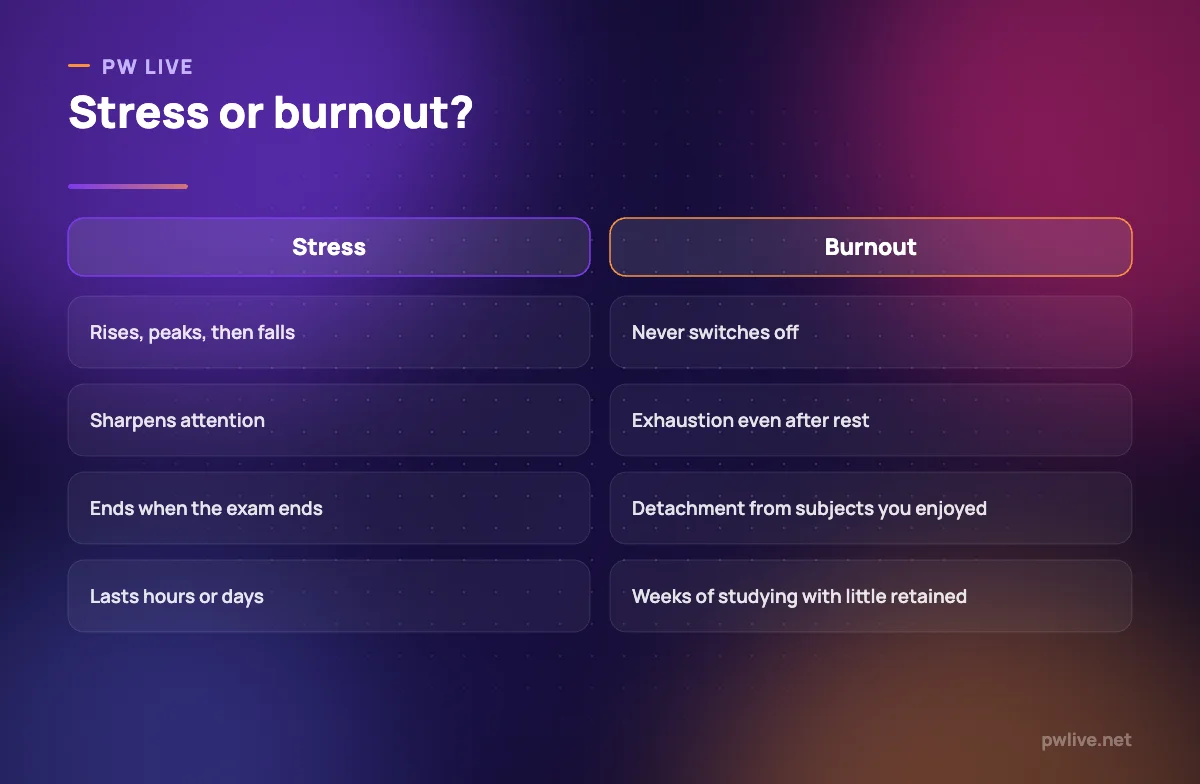
Stress rises before a test, peaks, and falls once it is over. Managed well, it is a tool.
Burnout is what happens when the demand never ends and recovery never comes. It is usually described through three features:
- Exhaustion: you feel drained even after rest, and small tasks feel heavy.
- Detachment: you stop caring about subjects you once enjoyed and feel cynical about the process.
- Reduced effectiveness: you study for hours, retain little and doubt your ability.
If these have lasted weeks rather than days, treat it as burnout, not laziness.
Why long exam preparation causes burnout
Competitive exam preparation has a shape that makes burnout likely:
- Long horizons. Months or years of work with one high-stakes day at the end.
- Constant comparison. Ranks, test-series leaderboards and batchmates who seem ahead.
- Identity fusion. When the result feels like a verdict on your worth, every mock test becomes a threat.
- No recovery built in. Timetables that fill every hour leave no room for the rest that learning requires.
You cannot shorten the syllabus, but you can change how you schedule, compare and recover.
Protect the basics: sleep, food and movement
When the basics slip, focus, memory and mood decline together.
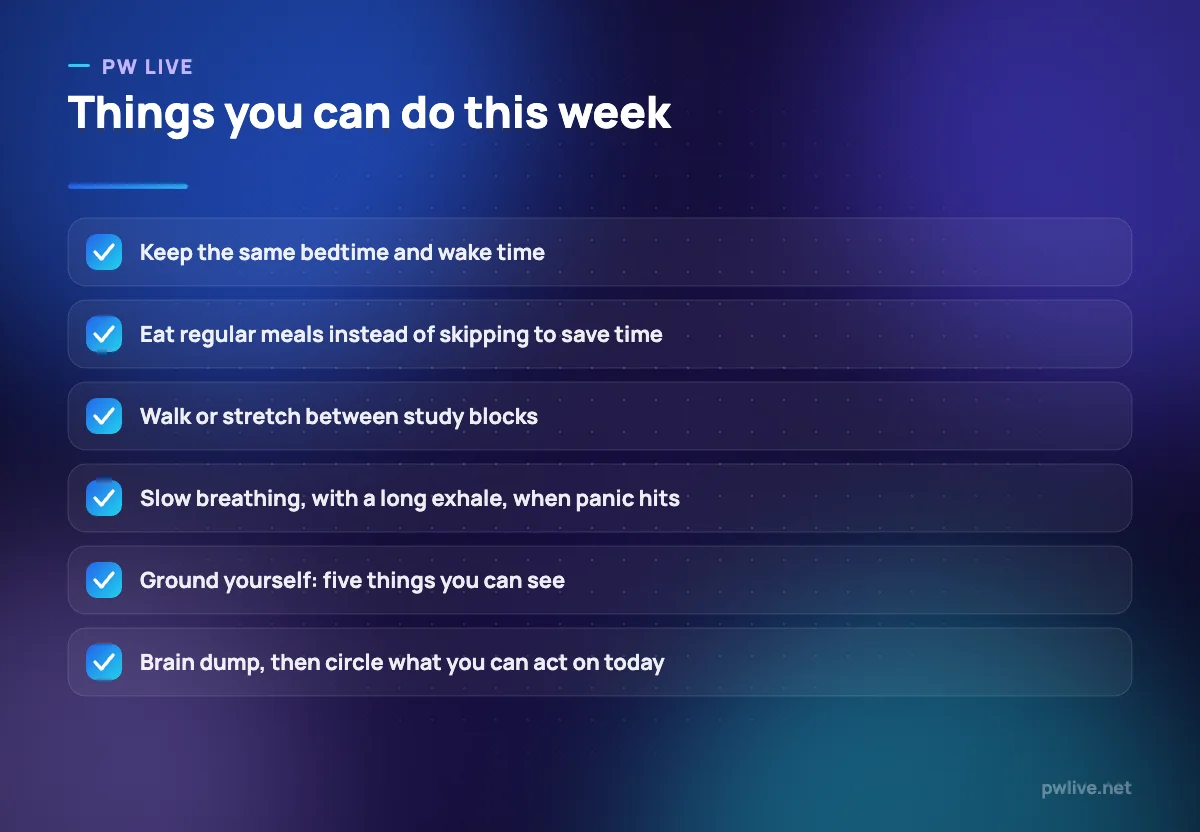
- Sleep: keep a consistent bedtime and wake time, even in intense weeks. Late-night cramming borrows from tomorrow’s recall.
- Food: regular meals with some protein and fibre keep energy stable. Skipping meals to save time is a false economy.
- Movement: a short daily walk or stretching between blocks improves mood and attention.
Treat them as non-negotiable appointments, not rewards.
Restructure your study so it stops feeding the stress
Much exam stress is really uncertainty: not knowing whether you are on track. A better plan reduces it.
- Plan realistic days. Six things finished beats fifteen abandoned.
- Work in blocks with breaks. For example, 45 minutes of focus followed by a 10-minute break. Adjust to what you can sustain.
- Practise with past papers and timed tests early. Familiarity with the format removes a major source of exam-day fear.
- Review weekly. Half an hour on what worked, what slipped and what next week should prioritise.
For a fuller method on revision and mock tests, see the exam strategy page, and for routines that protect attention, the productivity page.
Tools for the acute moments
When panic hits, you need something fast and simple.
- Slow breathing. Breathe in for a count of four, hold for four, out for four, for a couple of minutes. The counts are illustrative; the slow exhale is what matters.
- Grounding. Name five things you can see, four you can hear, three you can touch. It pulls attention back into the room.
- Brain dump. Write every worry on a page without editing, then circle the ones you can act on today.
Handle comparison and build support
Comparison turns healthy effort into misery. Mute groups where people post study hours and ranks, compare yourself with your own last month rather than a stranger’s best day, and remember that what people post is curated.
Burnout also thrives in silence, so decide now who you will talk to when things get hard:
- Family: tell them what kind of support helps, whether encouragement or fewer questions about marks.
- Friends: protect a weekly check-in where you talk about anything other than the exam.
- Yourself: schedule one thing each week that has nothing to do with the exam. Rest is part of the programme, not a break from it.
When to seek professional help
Self-help has limits. Speak to a doctor, a counsellor or a mental health helpline if any of these apply:
- Low mood or anxiety most days for more than two weeks.
- Sleep or appetite that has changed significantly and not recovered.
- Panic attacks, or physical symptoms with no medical cause.
- Losing interest in everything, not just study.
- Thoughts of self-harm or of not wanting to be here. Treat this as urgent and tell someone today.
Many schools, colleges and coaching institutes have counsellors, and helplines exist for students. Asking for help is managing the situation, not failing at it. For more on staying well during study, visit the health category.
Key takeaways
- Stress rises and falls with events; burnout is exhaustion, detachment and reduced effectiveness that persist for weeks.
- Long horizons, comparison and schedules without recovery drive burnout; all can be redesigned.
- Sleep, food and movement are the foundation of focus, not luxuries to earn.
- Realistic daily plans, timed practice and weekly reviews reduce the uncertainty that fuels stress.
- Build your support system early, and seek professional help when symptoms persist or feel unsafe.
Frequently asked questions
Is it normal to feel anxious before every mock test?
Some anxiety before a test is normal and can help performance. It becomes a problem when it stops you sleeping, studying or sitting the test at all.
Will taking a full day off hurt my preparation?
A planned rest day usually improves the following week’s focus and retention. Losing a day to exhaustion costs more than choosing one.
How do I tell my parents that I am struggling?
Choose a calm moment, describe specific symptoms such as sleep and concentration rather than just “stress,” and say what support would help. If that feels impossible, start with a teacher or counsellor.
Keep learning with PW Live
Browse every guide in Health & Wellness, or pick a skill track and follow the roadmap step by step.





Leave a Reply