

Learning to eat well on a student budget is less about nutrition science and more about logistics. Money is tight, time is tighter, and by 9pm after a long study day the easiest option always wins.
The aim here is not a perfect diet. It is a set of habits that keep you fed properly on ordinary days, cost less than what you are probably spending now, and do not collapse during exam weeks.
No calorie counting, no restrictive plans, no supplements. Just staples, a small amount of planning and a handful of meals you can cook without thinking.
Where student food money actually goes
Before changing what you eat, look at where the money leaks. For most students it is not the weekly shop. It is the small, repeated purchases.
The usual pattern is this: no plan for dinner, so an app gets opened. A snack because lunch was skipped. Cold drinks and packaged snacks bought one at a time. Groceries bought without a list, then thrown away when they go off.
Track it for one week without changing anything. Most people are surprised, and the surprise is more motivating than any advice. If you want a proper system around this, our guide to personal finance for students covers budgeting the rest of your month too.
Build a short list of meals you can repeat
Variety is the enemy of a student food budget. Every new recipe means new ingredients, most of which you use once.
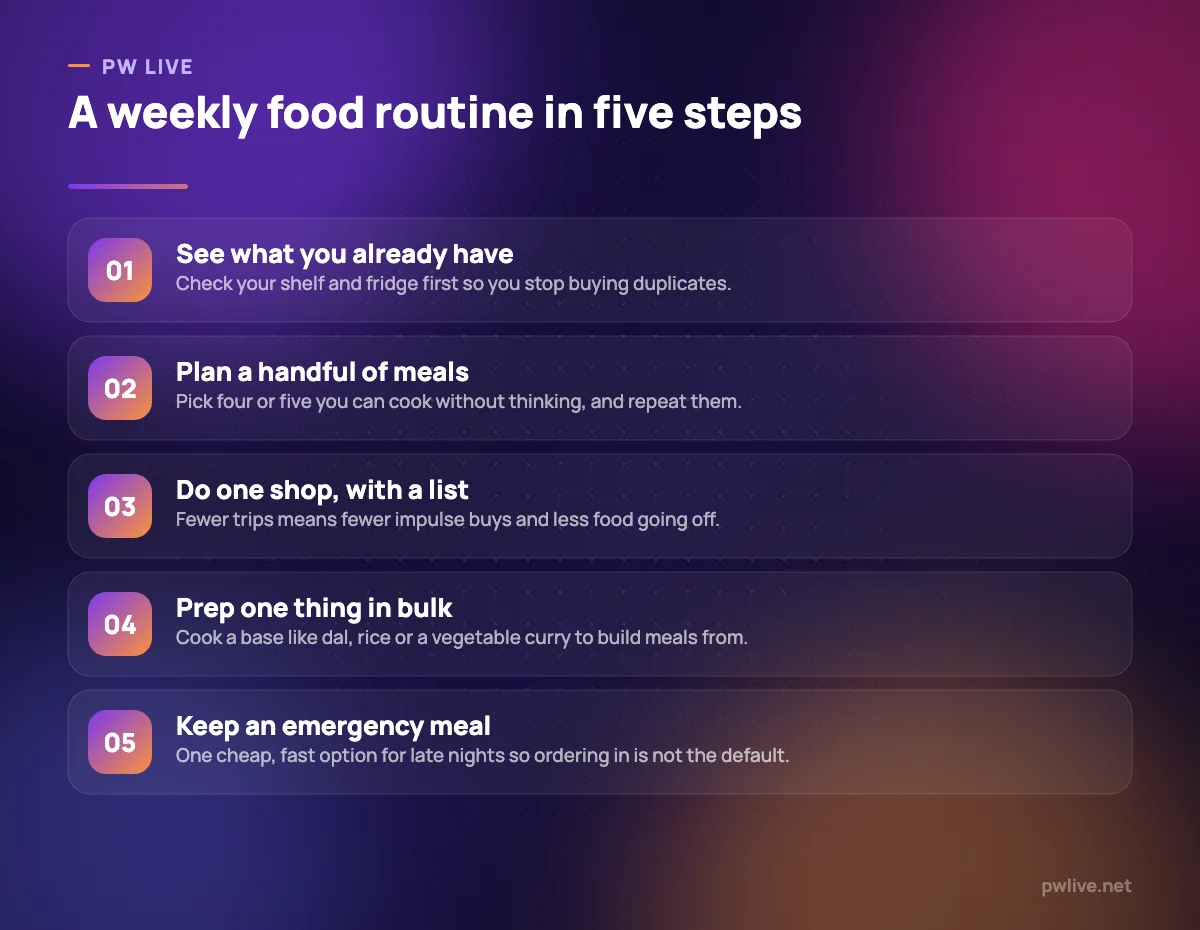
Pick four or five meals you genuinely like, can cook from memory, and that share ingredients. Rotate them. Add a new one occasionally when you feel like it, not as a rule.
Good candidates share three qualities: they use cheap staples, they reheat well, and they can be scaled up so one cooking session covers more than one meal.
The staples that do most of the work
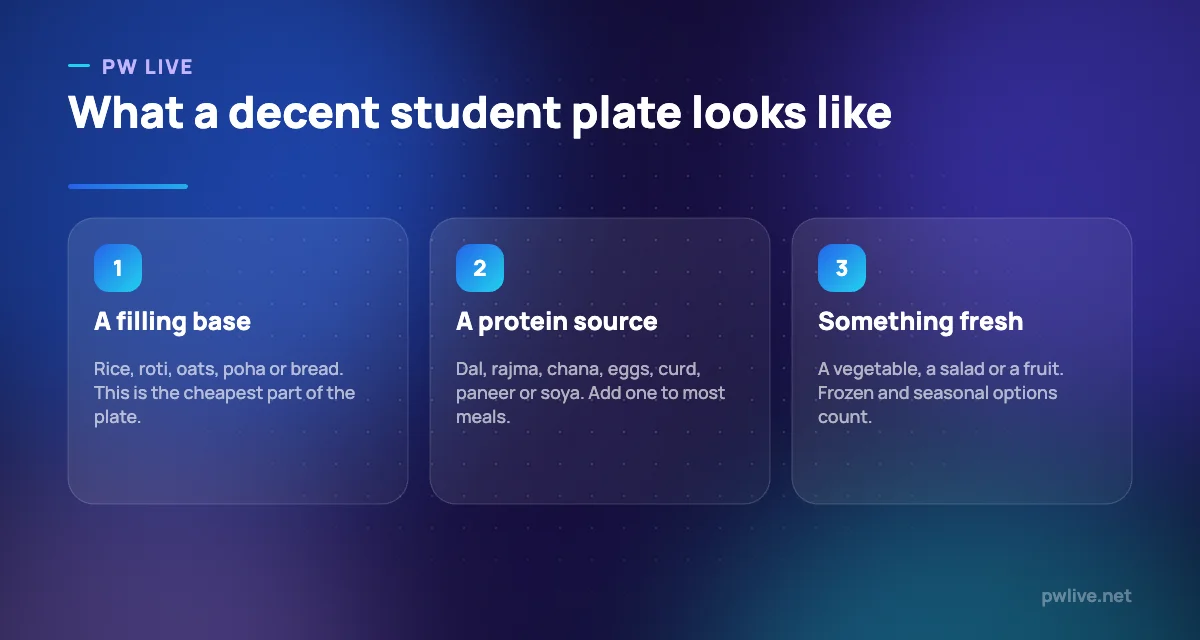
Cheap, filling and widely available beats trendy every time. A shelf built around these will feed you through most of a term:
- Grains and bases: rice, atta, oats, poha, suji, bread.
- Pulses and protein: dal, rajma, chana, soya chunks, eggs, curd, paneer.
- Vegetables: whatever is in season, plus long-lasting ones like onion, potato, carrot and cabbage. Frozen peas and beans are genuinely useful and rarely wasted.
- Fruit: whatever is seasonal, which is almost always the cheapest.
- Flavour: oil, salt, basic masalas, ginger, garlic, lemon. This is what stops repeated meals becoming boring.
Buy staples in slightly larger quantities when you can afford to, and perishables in small amounts. That combination is what keeps waste down.
Cook once, eat more than once
The single highest-return habit is batch cooking a base. Make a large pot of dal, rajma or a simple vegetable curry, and use it across several meals with rice, roti or bread.
Do the same with a grain. Cooked rice, boiled potatoes or a batch of chapatis turn a ten-minute dinner into a three-minute one.
This matters most on the days you least feel like cooking. A tired student with something already in the fridge eats reasonably well. A tired student with an empty fridge orders in.
Eating well when you have no kitchen
Plenty of students live in hostels or PGs with a mess, a kettle and not much else. The strategy changes, but the goal does not.
- Use the mess for your main meals and judge it fairly. It is usually cheaper and more balanced than what you would improvise.
- Fill the obvious gaps yourself. Fruit, curd, eggs, roasted chana, peanuts and milk are easy additions that need no cooking.
- Keep a small emergency supply for late nights so ordering in is not the only option.
- Use whatever appliance you are allowed. A kettle can handle oats, eggs and instant options that are better than a packet of chips.
- Share the cost. Cooking or shopping with one or two friends cuts both waste and effort.
The habits that matter more than the details
Most students do not need a better diet plan. They need a few boring behaviours to become normal.
- Do not skip meals to save time. Skipping usually gets repaid with a bigger, worse-quality meal later, and it makes afternoon study harder.
- Eat something in the morning, even if small. Studying on nothing is a common and avoidable cause of the mid-morning slump.
- Drink water through the day. Keep a bottle on your desk so you are not relying on remembering.
- Do not eat at your desk every single meal. A fifteen-minute break away from the screen is a real break, which our guide to screen fatigue and focus explains in more detail.
- Keep snacks that are not only packaged. Fruit, nuts, curd and roasted chana are easy defaults that need no preparation.
Food, sleep and movement are the same system. When one slips, the others usually follow, which is why our sleep and study guide and our simple exercise routine for students pair naturally with this one.
Eating during exam weeks
Exam periods are when food habits fall apart fastest: irregular hours, more caffeine, more delivery, fewer proper meals.
Prepare for it the way you would prepare for anything else. Batch cook before the week starts. Decide your two or three fallback meals in advance. Keep easy snacks within reach of your desk so you are not making decisions while stressed.
Be sensible about caffeine. It is fine in moderation, and it stops being useful once it is replacing meals or your sleep. Our exam stress and burnout guide covers the wider picture of holding yourself together through a demanding stretch.
Where to be careful
Two cautions worth stating plainly.
First, ignore the internet’s appetite for extreme food plans, cleanses and quick fixes. They are expensive, hard to sustain on a student schedule, and not what this guide is about. Ordinary meals, eaten regularly, are the goal.
Second, food and body image can become genuinely difficult. If you are regularly unable to eat, eating in ways that distress you, feeling constantly unwell, losing energy you cannot explain, or finding that worry about food is affecting your daily life, please speak to a doctor, a counsellor, or a trusted adult or friend. That is a sensible thing to do early, not a last resort. General guidance like this cannot replace advice from someone who knows your situation, particularly if you have an existing health condition or dietary requirement.
For the money side of student life, the finance archive and our personal finance skill track go further, and our guide to setting money goals you will stick to helps turn a food budget into a habit.
Key takeaways
- Most student food spending leaks through small repeated purchases, not the weekly shop.
- Pick four or five repeatable meals that share ingredients instead of chasing variety.
- Build meals from a filling base, a protein source and something fresh. No counting required.
- Batch cook one base so the tired version of you still has something to eat.
- Without a kitchen, use the mess for main meals and fill the gaps with no-cook additions.
- Avoid extreme plans, and speak to a doctor or someone you trust if food difficulties persist or affect daily life.
Frequently asked questions
Is eating healthily always more expensive?
Not usually. Dal, rice, seasonal vegetables, eggs and curd are among the cheapest food available, while packaged snacks and delivery are what quietly drain a student budget.
What can I eat if I only have a kettle and no kitchen?
Oats, eggs, instant options improved with vegetables, plus no-cook additions like fruit, curd, peanuts and roasted chana will cover a lot. Use the mess or canteen for your main meals where you can.
How do I stop ordering food late at night?
Remove the decision rather than relying on willpower. Have one easy fallback meal already prepared, keep a snack near your desk, and decide your dinner earlier in the day when you are not tired.
Should I take supplements to fill the gaps?
That is a question for a doctor rather than an article. If you are worried about your diet or your energy levels, get proper advice from a qualified professional rather than self-prescribing from the internet.
Keep learning with PW Live
Browse every guide in Health & Wellness, or pick a skill track and follow the roadmap step by step.





Leave a Reply