

Digital payments have quietly changed what running a small business feels like. Customers expect to pay by scanning a code, suppliers expect a transfer, and the shoebox of receipts that used to hold your accounts together has stopped being enough.
For most small businesses this is good news. Getting paid is faster, chasing money is easier, and you finally have a record of what actually happened rather than an approximation.
But the shift also creates new work: reconciliation, settlement timing, security and record-keeping. This guide covers what the change means in practice and how to set your business up so the benefits arrive without the headaches.
What actually changes when payments go digital
The obvious change is convenience. The important changes are less visible.
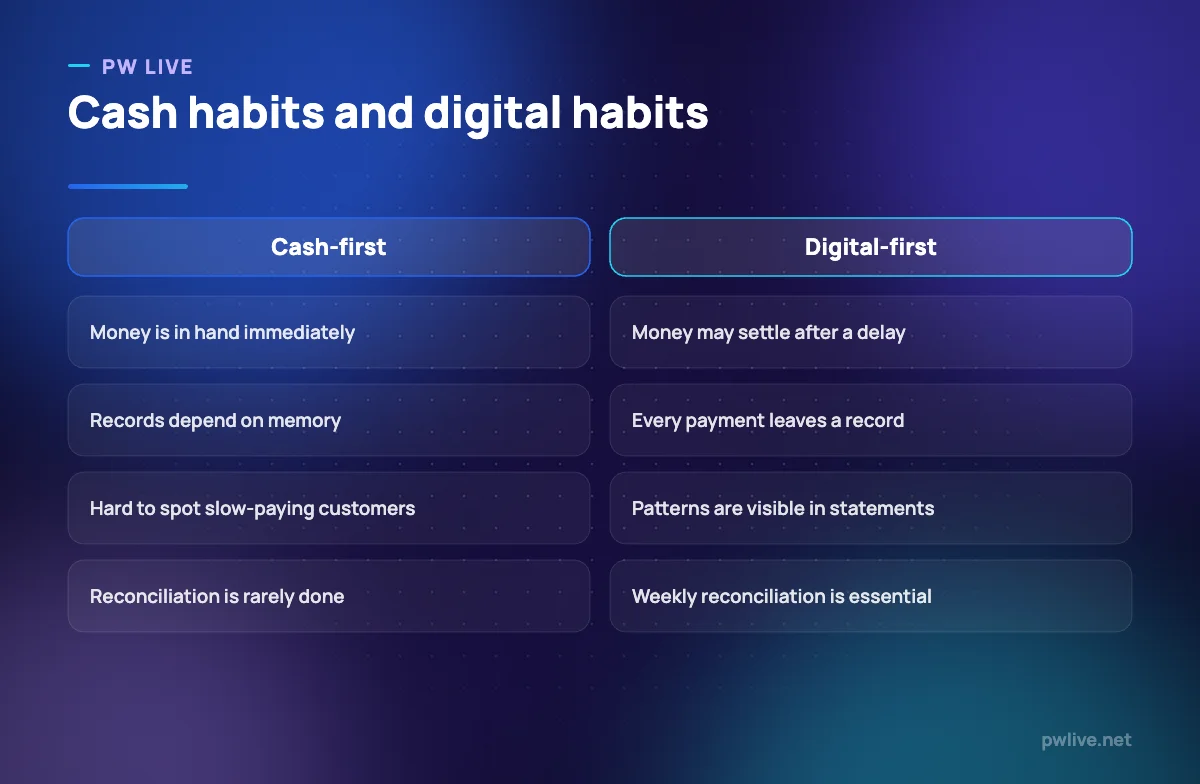
Every transaction leaves a trace. That is useful for you and it is also visible to your bank and, where applicable, the tax system. Businesses that once ran on rough estimates now need their books to match their statements.
Money moves on someone else’s schedule. Depending on the method, funds may reach your account instantly or after a settlement period. Planning around that timing is a real cash-flow question.
Your risk profile changes. You worry less about theft of cash and more about account security, wrong transfers and fraud attempts.
Customer expectations harden. Once buyers are used to paying digitally, being unable to accept it becomes a reason to walk away.
Getting the basics right before anything else
Set the foundations up once, properly, and most later problems disappear.
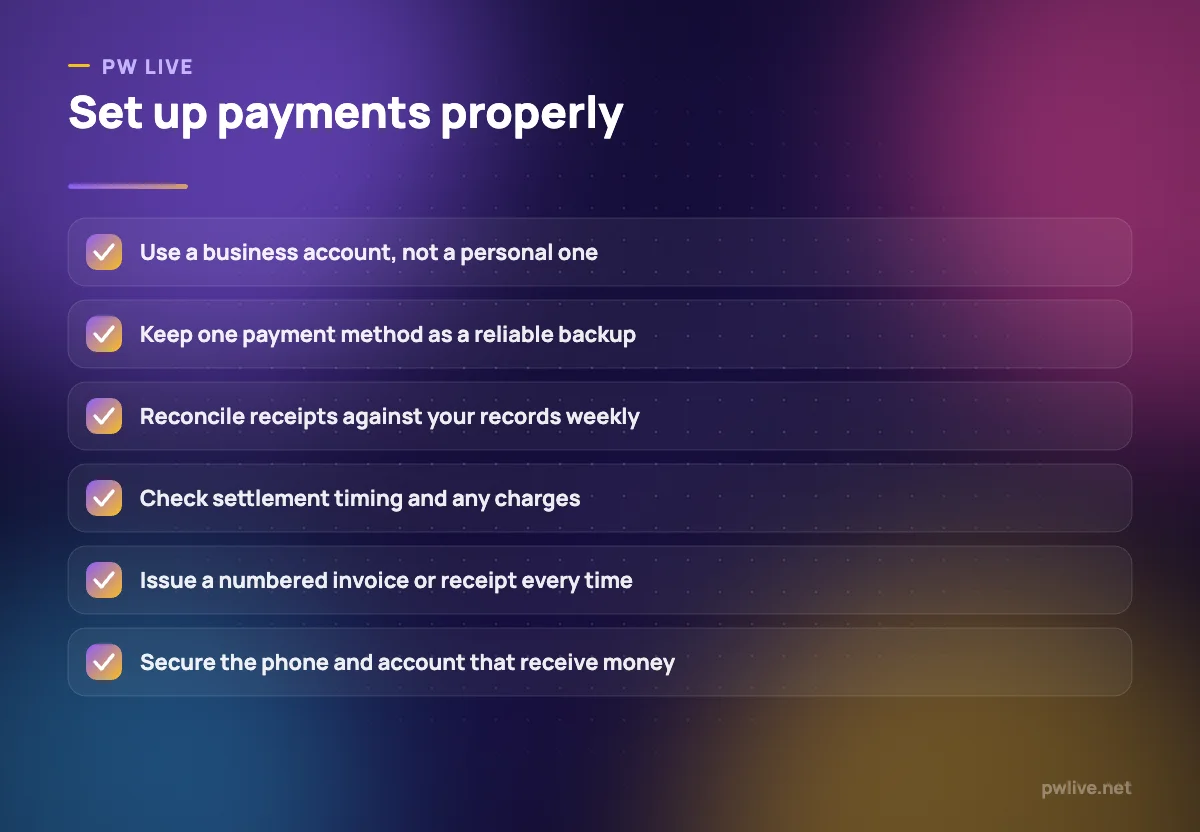
- Keep business money separate from personal money. Mixing them makes bookkeeping, tax and any future loan application unnecessarily difficult.
- Register your business correctly for your situation. Our guide to registering a small business in India covers the basic paths.
- Keep at least two ways to accept payment, so a single outage does not stop trade.
- Decide who in the business is allowed to receive and send money, and write it down.
- Confirm charges, settlement timelines and dispute processes with your bank or provider directly rather than relying on what another shopkeeper told you.
That last point matters. Terms differ between providers and change over time, so the only reliable source is your bank’s or provider’s own documentation.
Cash flow: the part most owners underestimate
Digital collection does not automatically mean money in hand. If a payment settles a day or more after the sale, and your supplier expects payment on the day, you have a gap to manage.
Three habits keep this under control.
- Know the settlement timing for each method you accept, and plan your outgoings around the slowest one.
- Keep a small buffer that covers your regular weekly outgoings, so a delayed settlement never stops you paying a supplier.
- Track money owed to you separately from money in your account, and review it weekly.
Our guide to cash flow basics explains why profitable businesses still run out of money, which is exactly the trap a settlement delay can create.
Records, invoices and staying compliant
Because digital payments generate records, your paperwork needs to agree with them. Mismatches are the main source of unpleasant surprises later.
Build a simple weekly routine:
- Download or export the week’s transactions.
- Match each one to a sale, a purchase or a transfer.
- Flag anything you cannot identify and resolve it while you still remember.
- File invoices and receipts in a way you can search.
Issue a numbered invoice or receipt for every sale, even small ones. Our guide to invoices, quotes and contracts covers the basics that protect you if a customer disputes a payment.
If you sell online or cross the relevant thresholds, tax registration and filing come into the picture. Our overview of GST and compliance basics for online sellers is a starting point, but check the official government portal for current rules, rates and deadlines, because those genuinely do change and no article should be your source for them.
Security is now part of running the shop
When money arrives through a phone or a laptop, that device becomes part of your cash box. Treat it that way.
- Use a separate, strong password for every financial account, stored in a password manager.
- Turn on two-factor authentication everywhere it is offered.
- Never share a one-time passcode with anyone, including someone claiming to be from your bank or a payment provider.
- Verify refund and payment requests through a number you already had, not one sent to you.
- Keep the device that receives payments locked and updated.
Fraud aimed at small businesses usually works through urgency and impersonation rather than technical attacks. Our guide to keeping your accounts safe with passwords, 2FA and phishing awareness covers the practical defences, and they take an afternoon to set up.
Using the data you now have
The most underrated benefit of digital payments is that you can finally see your own business clearly.
Once you have a few months of records, you can answer questions you previously guessed at: which days are strongest, which products actually sell, how much an average sale is worth, and how that has moved.
Start with three simple views in a spreadsheet: sales by week, sales by product or service, and your regular outgoings. That is enough to spot a pattern worth acting on.
If you are extending into selling online, our guide to starting to sell online in India covers the choice between marketplaces and your own store, where payment handling differs meaningfully. You can also browse the business category for more, and the personal finance skill track if the money side is where you feel least confident.
What to tell your customers
A small amount of clarity prevents most payment disputes.
Display the payment methods you accept where customers can see them before they buy. Confirm receipt of payment explicitly rather than leaving the customer wondering. State your refund approach in plain language, and keep it consistent.
For larger orders, put the terms in writing before work starts: what is due, when, and what happens if it is late. It feels formal for a small business, and it saves relationships.
Key takeaways
- Digital payments speed up collection but introduce settlement timing, reconciliation and security work.
- Keep business money separate from personal money from day one.
- Reconcile transactions weekly and issue a numbered receipt or invoice for every sale.
- Treat the device and accounts that receive money as your cash box, and secure them accordingly.
- Check charges, settlement times and tax rules with your bank or the official government portal, never with rumour.
Frequently asked questions
Do I need a separate bank account for my small business?
It is strongly advisable. Separating business and personal money makes bookkeeping, tax filing and any future credit application far simpler, and it prevents the most common record-keeping mess.
How often should I reconcile my payments?
Weekly is a good default for a small business. Anything longer and you will struggle to remember what an unidentified transaction was for.
What should I do if a customer says they paid but the money has not arrived?
Ask for the transaction reference, check your own statement rather than a screenshot, and raise the matter with your bank or provider using their official support channel if the payment genuinely appears to be stuck.
Where can I find the current rules on tax for digital transactions?
Use the official government tax portal and, if your situation is complex, a qualified accountant. Rules and thresholds change, so avoid relying on articles, forwarded messages or advice from other traders.
Keep learning with PW Live
Browse every guide in News & Updates, or pick a skill track and follow the roadmap step by step.





Leave a Reply